Brand Extraction
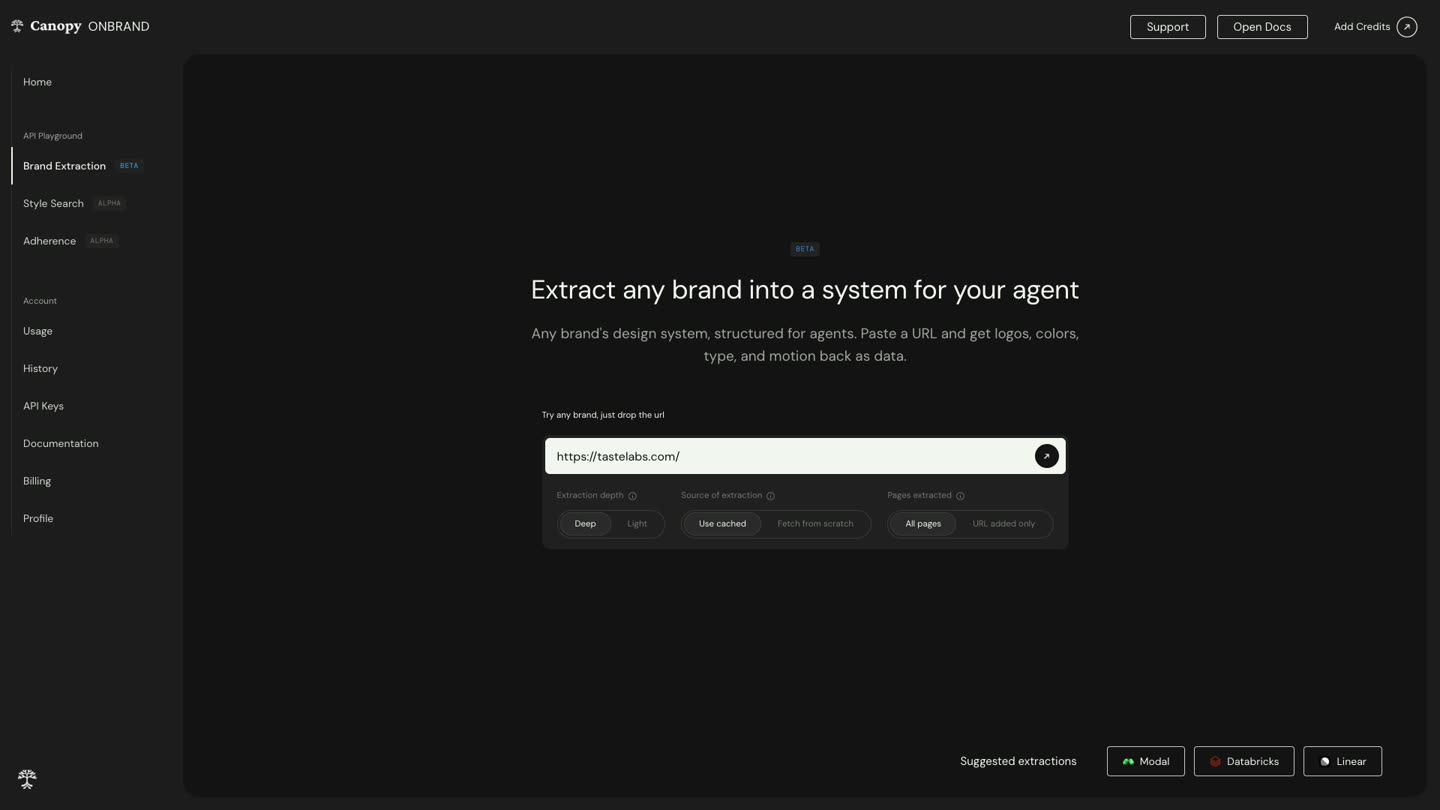
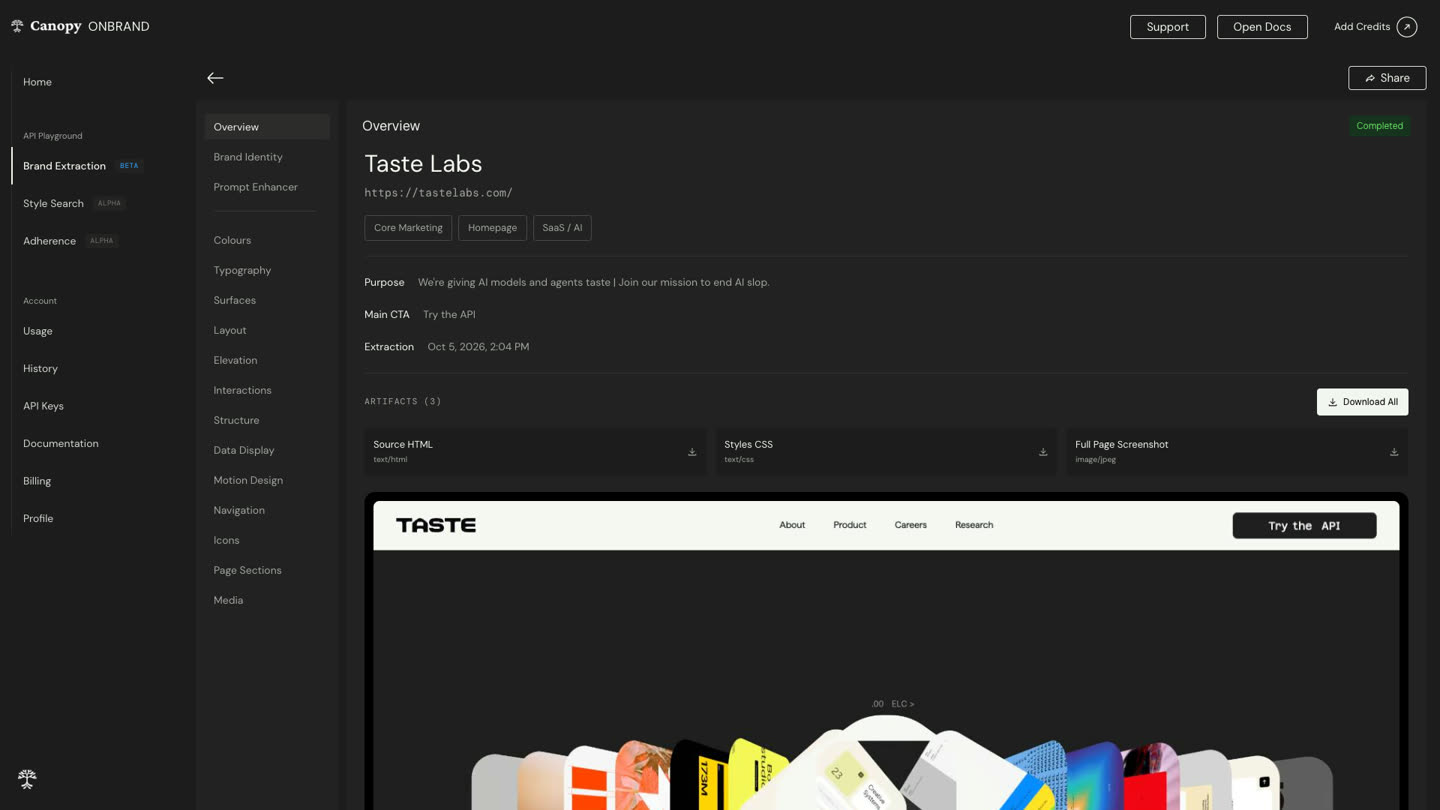
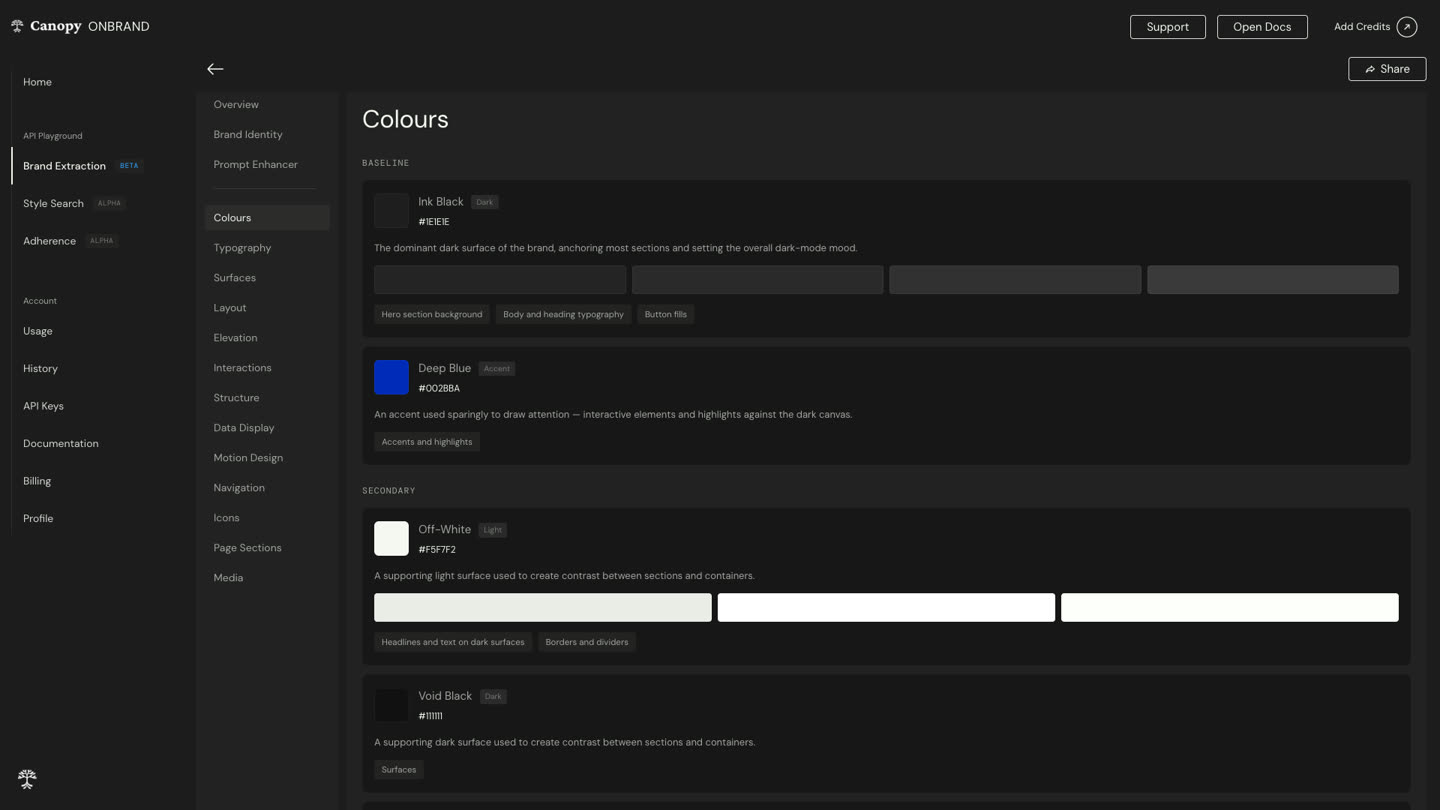
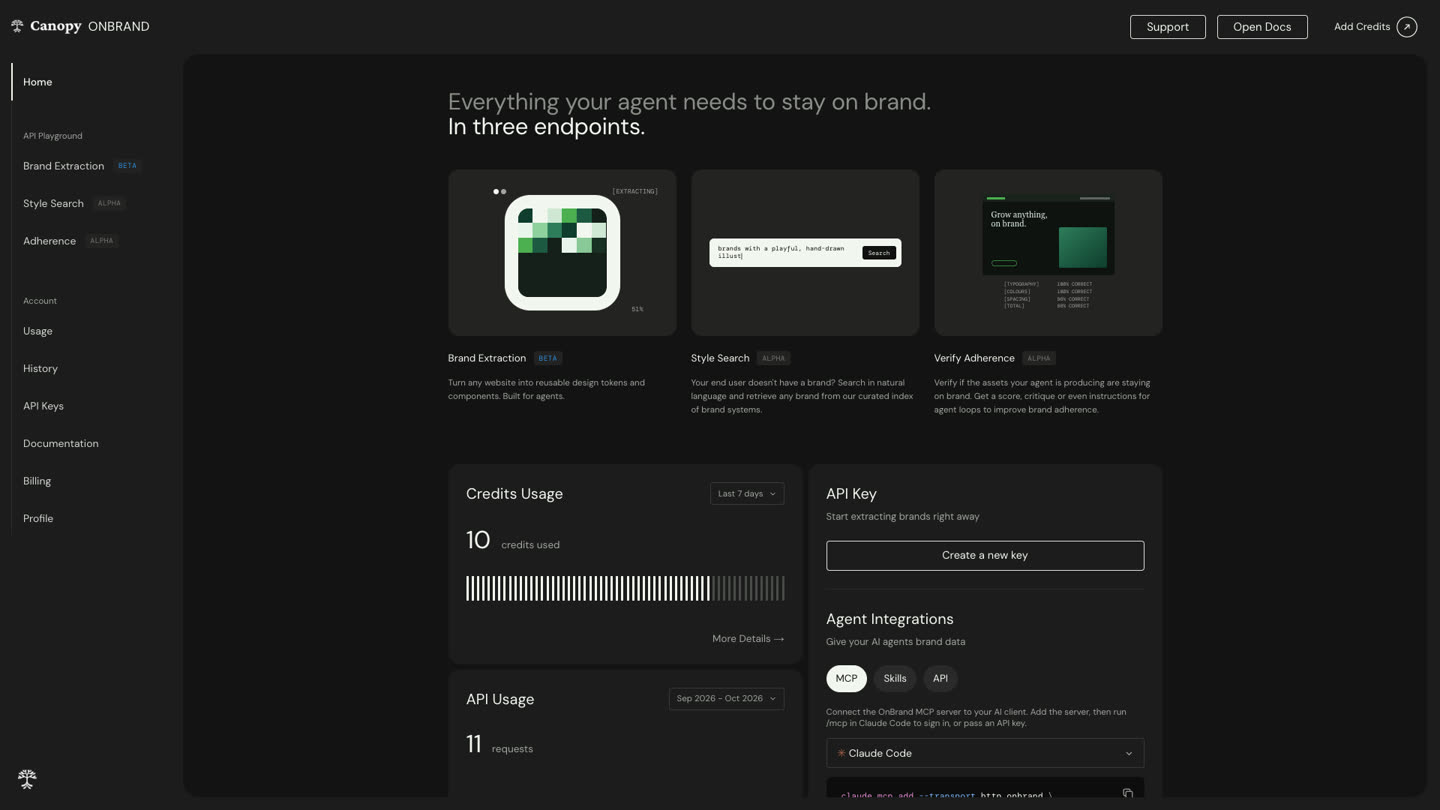
BetaGive it a URL and get the whole brand system back: logos, colour palettes, fonts, motion, textures, shadows and more, as structured data your agent can read.
Extract any brand system, search for style inspiration, and verify if it’s staying on course. Built for gen AI applications, agents and developers.
20 free credits. Try the OnBrand API now or read the docs.
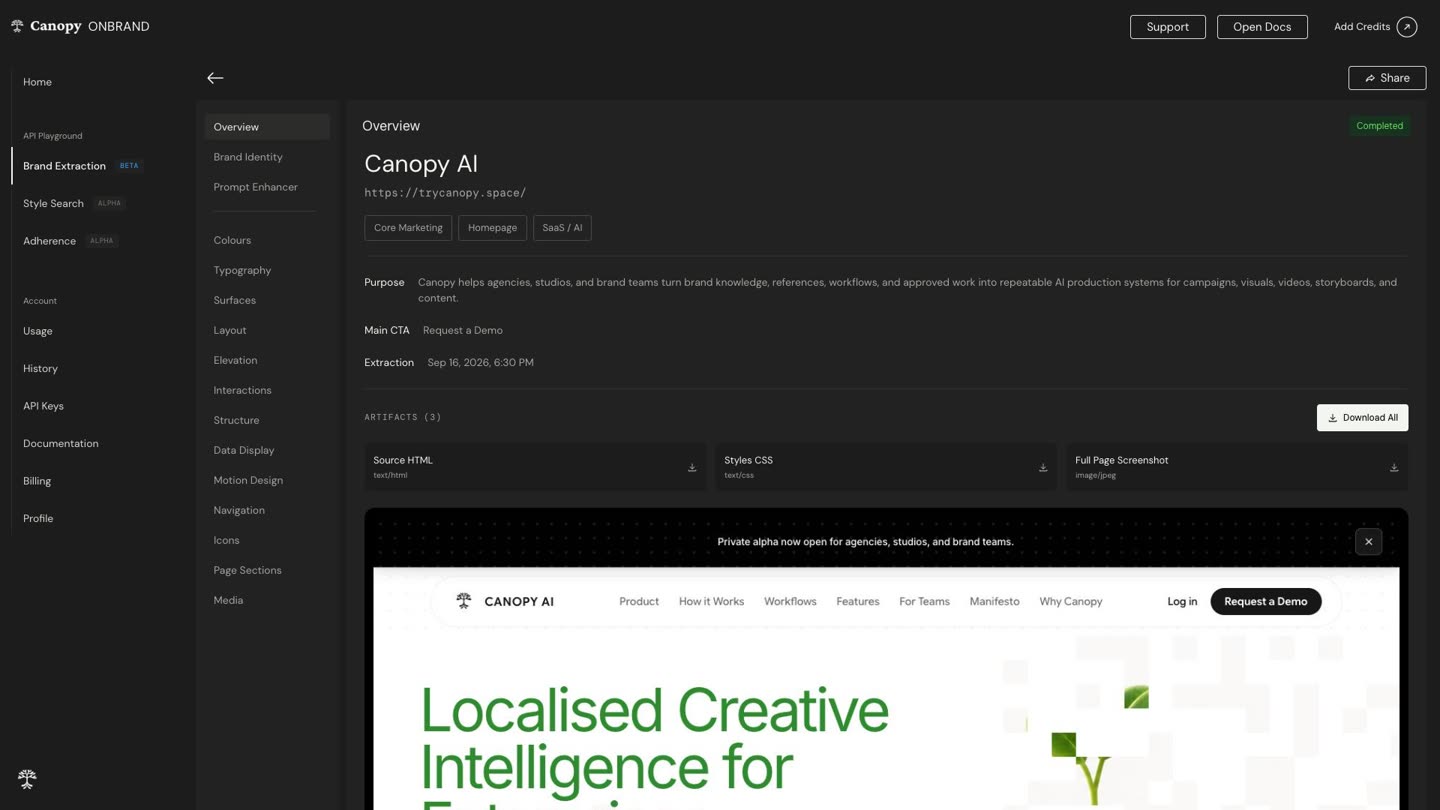
We’re building the brand layer for AI. OnBrand is the first agent tool we’re shipping from Canopy Labs. A brand is years of craft and care, and it’s what makes a product feel whole. We want your agents to respect it.
Three endpoints
Give it a URL and get the whole brand system back: logos, colour palettes, fonts, motion, textures, shadows and more, as structured data your agent can read.
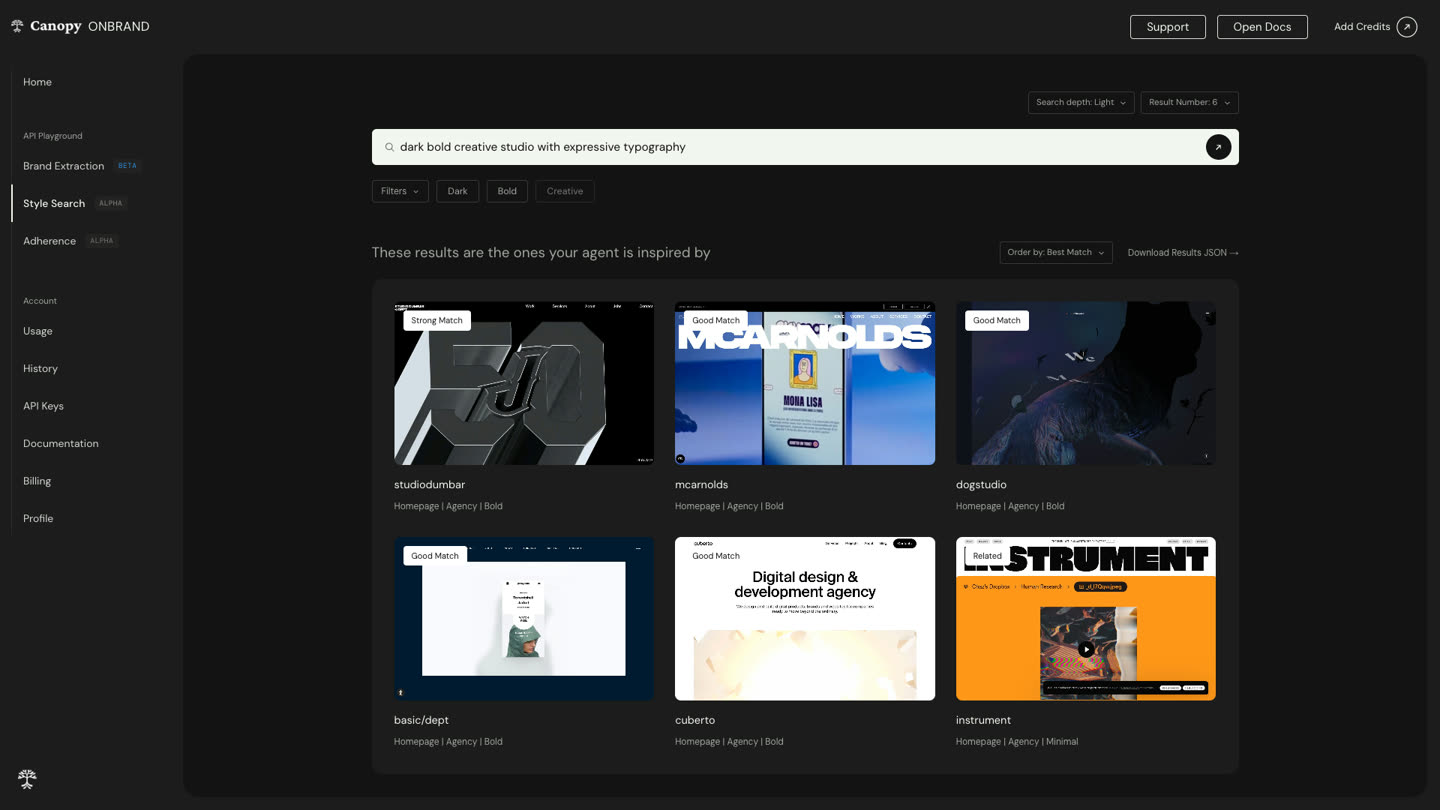
Your user doesn’t have a brand yet? Your agent can describe a look in plain language and pull real brand systems from our curated index, like “a calm editorial bank”.
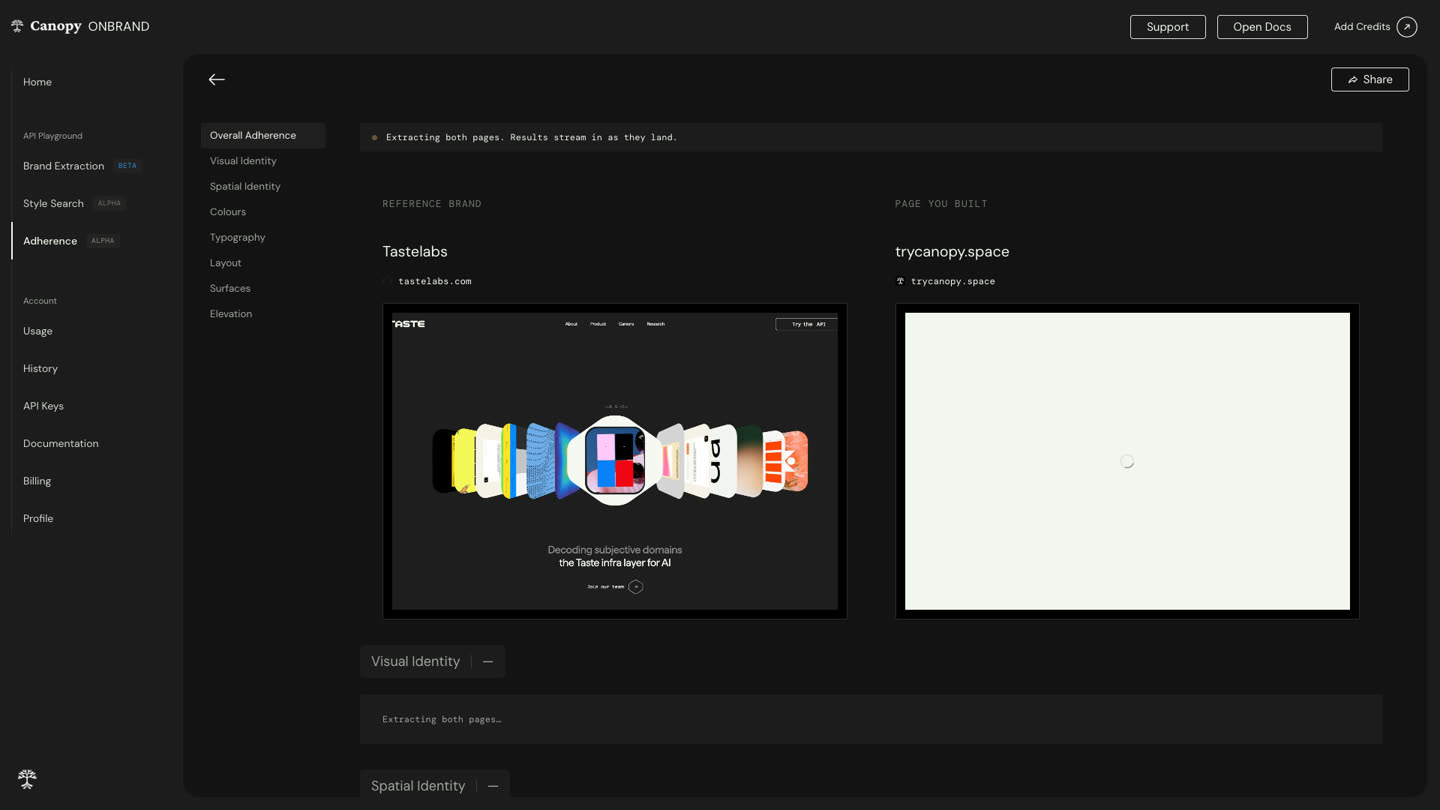
Check whether what your agent made is still on brand. Get a score, a critique and exact fixes your agent loop can apply until it is.
Before and after
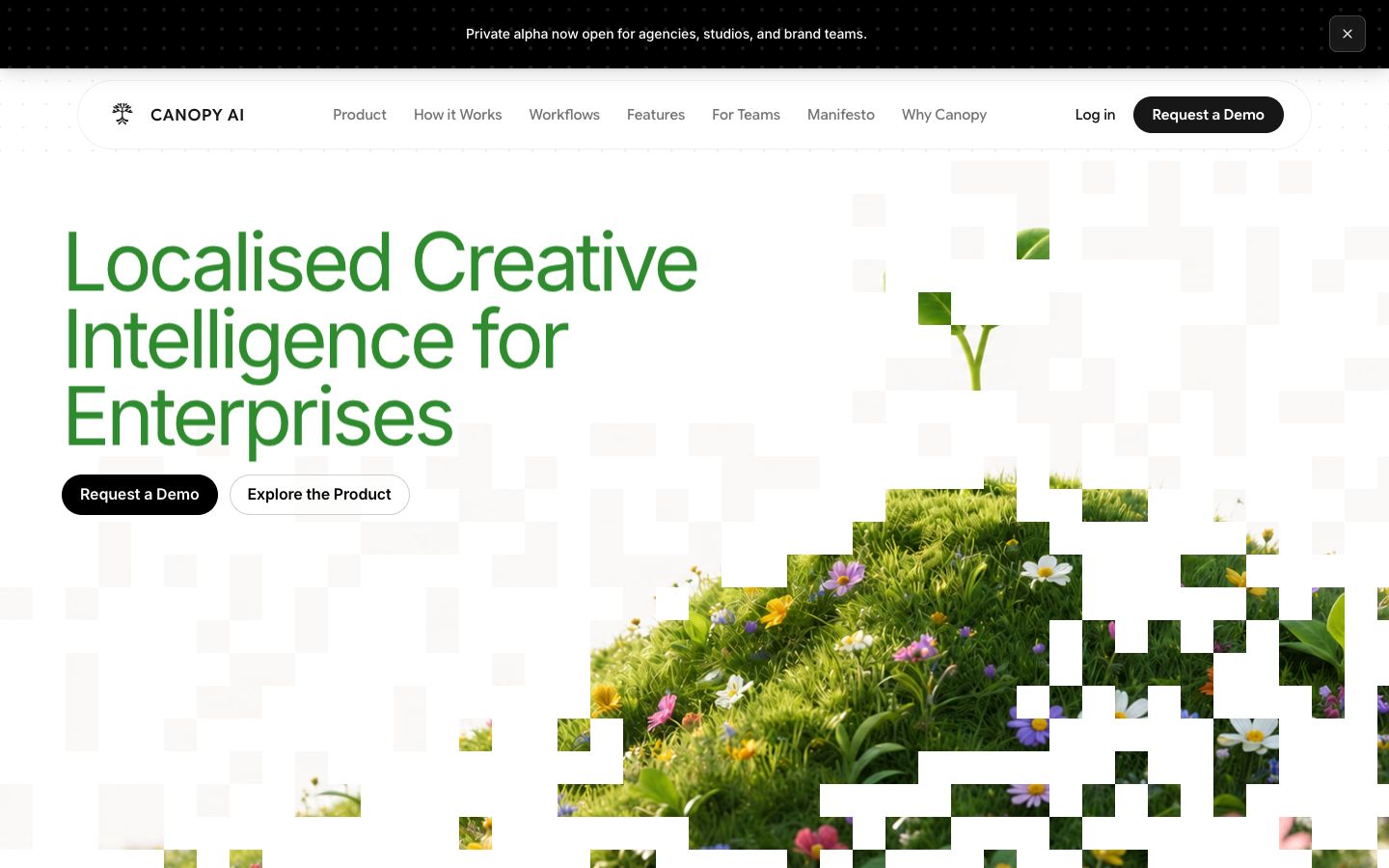
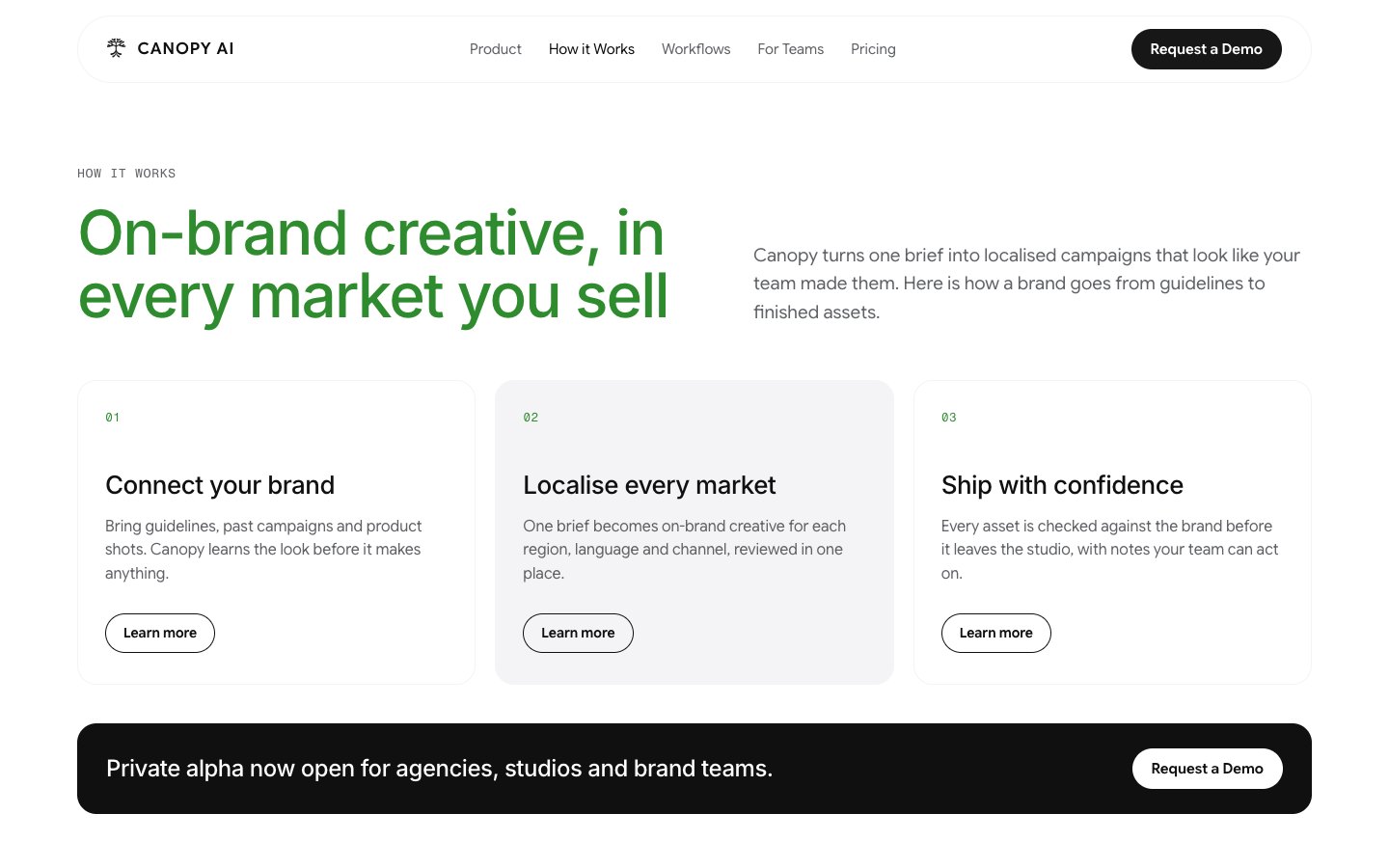
The page on the right is new. Every colour, type stack, radius and button style in it comes from OnBrand’s extraction of the original.
 Canopy Labs
Extraction, search and verification run on the same engine, so the values your agent builds with are the same values it’s checked against.
Read the docs
Integrations
Use OnBrand from anything you build: apps, internal tools, automations and coding agents. REST, an MCP server and agent skills, one key.
Pricing
$79 per month
600 credits
Let’s talk volume pricing
SLAs & support
How the three endpoints work, and what happens when a run fails.
Read the docsAn API that turns any website into a structured brand system. Give it a URL and it returns colours, typography, layout, components and a brand profile as JSON, plus the captured HTML, CSS and screenshots. From there you can search a curated index for brands with a similar look, and score any page against a reference brand. OnBrand is built by Canopy Labs.
Three parts on one engine. The Extractor renders a page in a real browser and turns what it measures (computed styles, CSS, structure, screenshots) into a brand system plus the source artifacts. Search ranks brands in our curated index from a plain-language description, or from one of your own extractions. The Verifier extracts two pages and scores how closely one follows the other’s brand. Extraction and verification are jobs you poll; search answers straight away.
Yes. There’s an MCP server for Claude Code, Cursor, Codex and any other MCP client, authenticated with your API key. It exposes the same extract, search and verify tools as the REST API, and lets an agent read back only the sections it needs so its context stays small. Two agent skills, onbrand-search and onbrand-adherence, teach it how to use them well.
Usually under a minute for a single page, a little longer with deep analysis on. Results are cached per URL, so a page someone already extracted comes back immediately (pass force: true for a fresh run). Sections stream in while it runs, so you can read partial output early. If it fails, the status says failed with the reason, and the credits are refunded automatically.
Describe the look you want (“dark brutalist developer tools”) or point at one of your extractions to get its nearest neighbours. You get brand cards with palette, typography, taxonomy tags and a screenshot. Fast returns in a second or two; deep re-ranks with AI and explains each match. Filters like industry, hue, page type and layout are hard constraints, not hints. If a search fails, the credit is refunded.
Give it two URLs: the reference brand and the page you want judged. We extract both, then return a score from 0 to 1, recommendations in plain language and structured fixes with exact target values. Both lists are worst-first, so they work as a to-do list for an agent loop. If a run fails it says so and stops, so you never wait on a verdict that isn’t coming, and the credits are refunded.